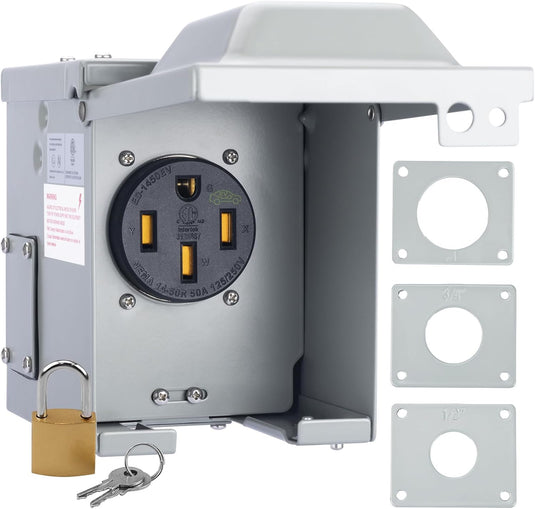
One Outlet, All Your Power Needs: Why a 50A RV Panel is the Ultimate Upgrade
Introduction: Your Home's Missing Power Station
Most RV owners face the same frustrating scene: their expensive rig sits beside the house, connected by a web of extension cords and adapters snaking from the garage. One cord for the RV, another for power tools, a third for patio lights. It's messy, inconvenient, and—most importantly—potentially dangerous.
This makeshift setup forces high-demand RV systems to rely on circuits never designed for them, creating risks of overheating and voltage drop. But there's a professional solution that eliminates the clutter and danger: installing a dedicated RV outlet panel.
As YouTube creator Mike from Triple Tacres demonstrated while upgrading his own setup, the smart move is to install a 50 amp RV outlet from the start. "You never know what the future holds," he advises. This forward-thinking approach creates a versatile, safe power station right at your home base.
Why Your Current Setup Might Be Risky
Before exploring solutions, understand what's wrong with typical DIY approaches:
- Adapter Overload: Using adapters to plug a 30-amp or 50-amp RV into a standard household outlet dangerously overloads the circuit.
- Weather Vulnerability: Basic outdoor outlets lack proper protection against rain, dust, and temperature extremes.
- Future Limitations: Installing only a 30-amp outlet today could mean expensive rewiring tomorrow if you upgrade to a larger RV requiring 50-amp service.
The Professional Solution: All-in-One Power Management
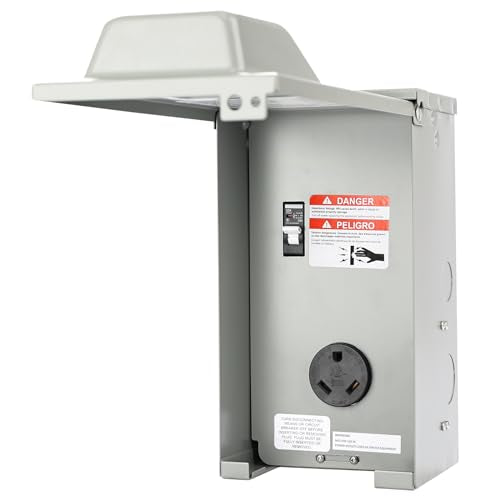
A quality RV outlet panel serves as your personal power pedestal, consolidating multiple needs into one secure unit. Here's what makes it superior:
1. True Versatility in One Box
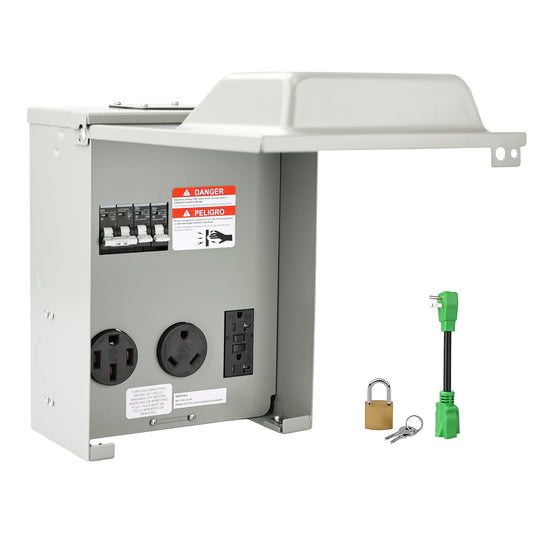
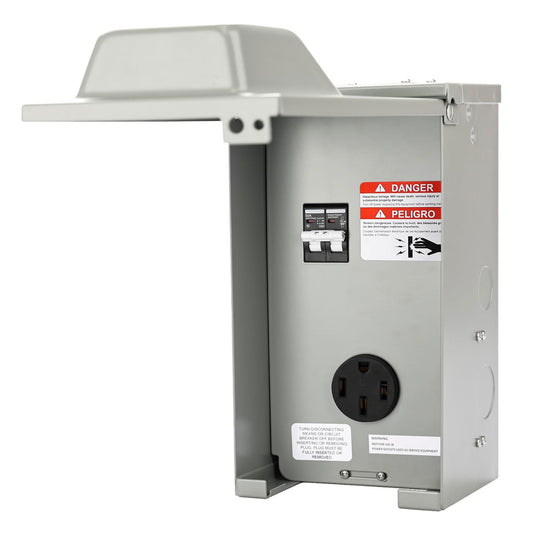
A proper panel includes three dedicated, correctly wired outlets:
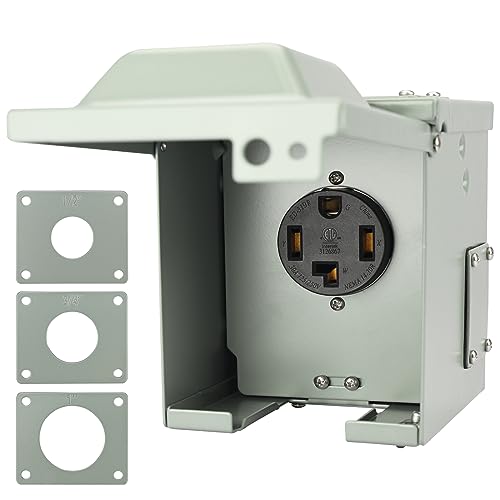
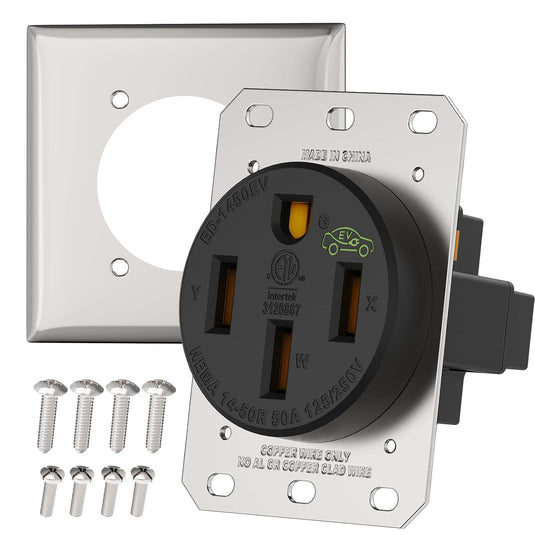
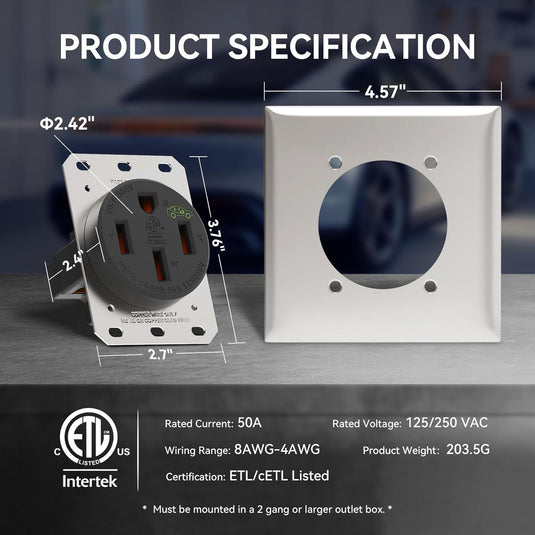
- 50-Amp (14-50R): For large RVs with dual A/C units
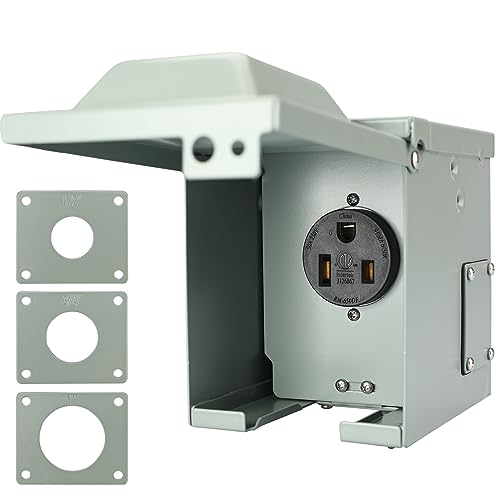
- 30-Amp (TT-30R): For standard travel trailers
- 20-Amp (5-20R): For tools, lighting, and general use
This eliminates the adapter jungle—you plug directly into the appropriate outlet every time.
2. Engineered Safety Features
This is where quality panels separate themselves from basic boxes:
- Perfectly Matched Breakers: Each outlet must be protected by a circuit breaker rated specifically for that outlet. Mismatched breakers (like a 30-amp outlet on a 50-amp breaker) create serious fire hazards.
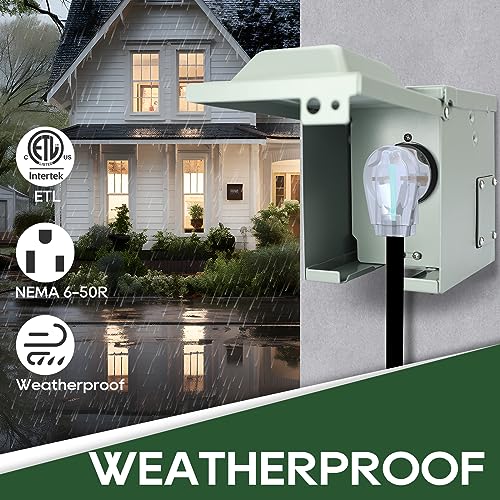
- ETL Listed Assembly: Look for products listed as complete units, not just components with individual certifications. ETL listing means the entire assembly—box, breakers, wiring—meets rigorous safety standards.
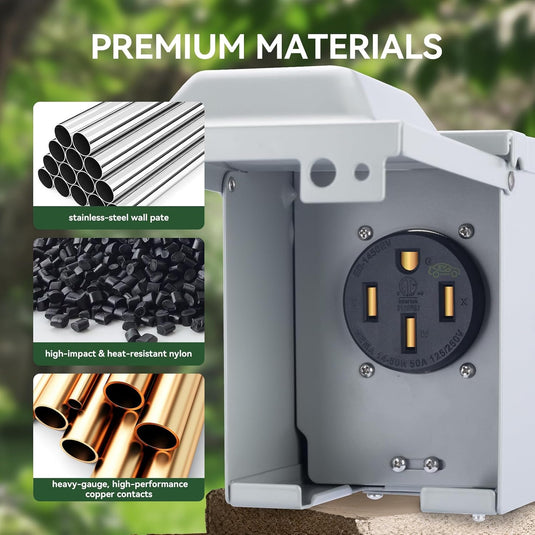
- Industrial Protection: A Type 3R rated enclosure withstands rain, sleet, and external ice. Heavy-gauge metal with powder coating resists corrosion and damage.
3. Smart Design for Real Installation
Mike's installation video reveals features that matter during actual use:
- Pre-Wired Construction: Internal wiring between breakers and outlets saves time and reduces installation errors.
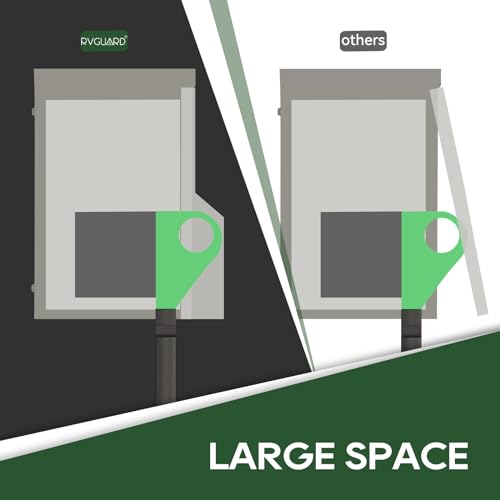
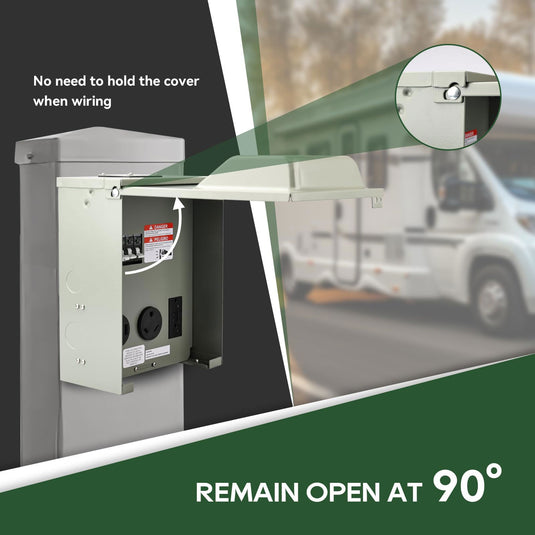
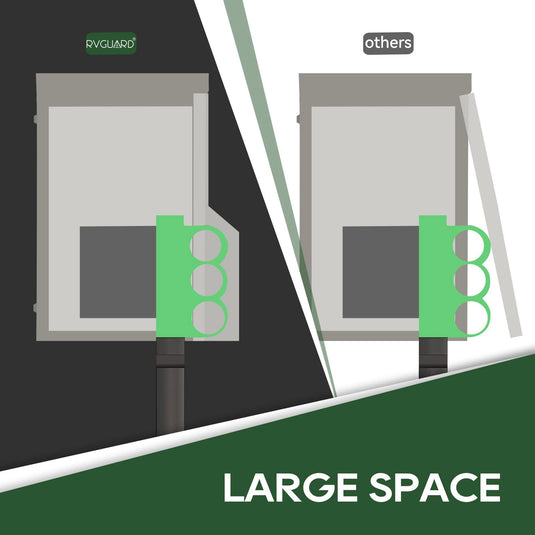
- Practical Features: Multiple mounting holes, a cover that locks open at 90 degrees, and a spacious interior that accommodates bulky adapters while maintaining weatherproofing.
- Security Options: A built-in hasp for a padlock prevents unauthorized use.

RV Power Pedestal vs. RV Outlet Box: What's the Difference?
While terms are often used interchangeably, there's a distinction:
- RV Power Pedestal: Typically freestanding, commercial-grade units at campgrounds, often with additional features like meters.
- RV Outlet Box/Panel: Streamlined, wall-mounted versions for residential use.
For home applications, a quality outlet panel provides all essential safety and functionality in a more compact, cost-effective form. The core principles remain identical: matched breakers, robust enclosures, and proper outlets.
A Real-World Case for Future-Proofing
Mike's experience perfectly illustrates why planning ahead pays off. He installed his 50-amp panel while still using a 30-amp camper. Soon after, his family considered upgrading to an RV with two air conditioners—requiring 50-amp service.
"If I would have put that 30 amp service in... I would have been upset doing all that work," he noted.
By installing higher capacity from the start, he avoided costly rework and added value to his property. His investment serves current needs while preparing for future possibilities.
Key Considerations Before You Install
This is a significant electrical upgrade requiring careful planning:
- Good Candidate If: You have dedicated RV parking at home, need robust outdoor power for a workshop, or want a permanent, safe power solution.
-
Essential Requirements (Consult an Electrician!):
- Service Capacity: Your main electrical panel must have space for a 50-amp double-pole breaker.
- Proper Wiring: A 50 amp RV outlet requires 6-gauge wire—thick, expensive, but mandatory for safety.
- Codes & Permits: Most areas require permits and professional installation meeting local electrical codes.
How to Install a 50 Amp RV Outlet: The Professional Process
While we always recommend hiring a licensed electrician, understanding the process helps you plan effectively:
- Assessment & Planning: An electrician checks your panel's capacity and plans the circuit route.
- Running Conduit & Wire: 6-gauge wire runs through protective conduit from panel to installation site.
- Mounting the Panel: The outlet box gets securely mounted, with conduit properly sealed against weather.
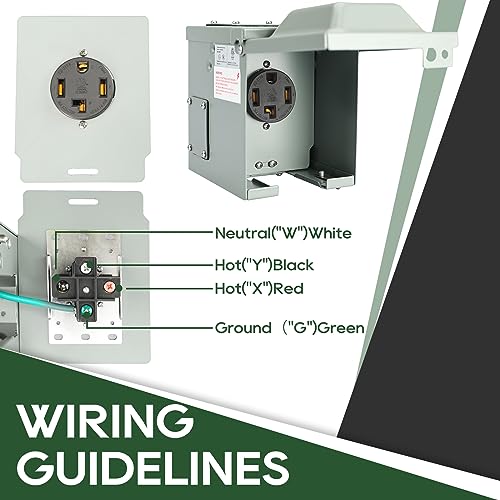
- Making Connections: At the main panel: the two hot wires connect to the 50-amp breaker, neutral to the bus bar, ground to the grounding bar. At the outlet box: wires connect to corresponding terminals.
- Testing & Verification: The electrician tests voltage, checks for proper grounding, and verifies all breakers function correctly.
Conclusion: From Chaos to Control
Upgrading to a dedicated RV power panel transforms your home setup from a hazardous clutter to an organized, professional power station. It's an investment in safety, convenience, and property value that pays dividends for years.
By choosing a properly engineered panel with matched breakers and true weather protection, you're building a reliable foundation for every adventure—starting right from your driveway.
Ready to simplify your power setup? Start by consulting a qualified electrician about adding a 50 amp RV outlet to your property. It's the upgrade that brings campground convenience right to your home base.
Explore Related Products