Your RV Furnace Runs Nonstop, But Your Floors Are Still Cold? The Science-Backed Fix
Picture this: It’s late. The wind is howling outside your RV. Your furnace has been dutifully humming for hours, and the thermostat reads a cozy 68°F (20°C). You reach down from your bunk to grab a water bottle, and your hand touches the floor. It’s startlingly cold. Suddenly, you feel the chill creeping up from your feet despite the warm air on your face.
If this scenario feels familiar, know this: you are not imagining things, and your furnace probably isn't broken. You’re experiencing a classic case of thermal stratification, and fixing it doesn't require buying a bigger heater. It requires understanding a little physics and applying some clever, inexpensive fixes.
The Real Culprit: Your RV's "Hot Ceiling" Problem
The air inside your RV isn't one uniform temperature. Warm air is less dense than cold air. Think of it like oil and water—they separate based on density. Your RV furnace acts like a pump for "light" hot air, blowing it out from vents typically positioned high on the walls or ceiling.
Where does that hot air go? Straight to the top. It forms a warm, comfortable layer—a "hot ceiling"—that your head and thermostat enjoy. Meanwhile, the denser, cold air sinks and pools on the floor, creating a stubborn "cold lake." Without intervention, these layers have little reason to mix. This is why your nose can be warm while your toes are numb. It's not a lack of heat; it's a failure of distribution.
The Instant Fix: Two Low-Cost Tools to Redistribute Heat
The goal is simple: mix the layers. You don't need to generate more heat; you need to move what you already have. Forget complex systems—these two simple tools can work wonders tonight.
1. The Game-Changer: A Simple Fan (Not How You'd Expect)
Most people think to point a fan at themselves. We're doing the opposite.
- Get This: Any small, portable oscillating fan. A basic desk fan is perfect.
- Do This: Place the fan on the floor, near the center of your living space. Tilt the head so it's blowing horizontally, parallel to the floor. Turn it on the lowest setting and set it to oscillate.
- Why It Works: You're not trying to blast hot air down. You're strategically disturbing the cold boundary layer at floor level. By gently stirring that stagnant pool of cold air, you kick-start natural convection. The warmed air above now has space to sink and replace it. Within an hour, the temperature difference between your head and feet can shrink dramatically. An added bonus? Your thermostat, now sensing a more average room temperature, will cycle off sooner, saving propane or battery power.
This is one of the most effective answers for anyone wondering how to heat an RV without electricity on full blast—it makes your existing heat vastly more efficient.
2. The Personal Barrier: Strategic Floor Insulation
While the fan mixes the air, you can directly attack the problem underfoot.
- Skip the "RV Tax": Don't overpay for marketed "camper rugs." Head to a hardware or farm store.
-
Buy This:
- Interlocking EVA Foam Mats: The kind used for kids' playrooms or gyms. They're lightweight, easy to cut to fit odd spaces, and provide excellent insulation.
- Rubber Stall Mat: A heavier, ultra-durable option. It's a champion at blocking cold radiating from the floor and provides superb sound dampening.
- Why It Works: These mats create a thermal break between your feet and the cold floor surface. The sensation is immediate. Lay them in high-traffic areas: by the bed, in front of the sink, in the living area. They're a cornerstone of true camper comfort during winter.
The Non-Negotiable Foundation: Stability Before Warmth
Here’s the critical truth most guides miss: All your heating strategies depend on a perfectly level RV.
If your rig is tilted—even slightly—physics works against you. Gravity will pull that layered air into a diagonal nightmare. The "hot ceiling" will cram itself into the highest corner, while the "cold lake" will deepen in the lowest one. Your cleverly placed floor fan will now just circulate uneven pockets of air.
This is where a modern camper leveling system transitions from a convenience to a necessity.
For decades, the go-to was scrap wood. It's a solution, but it comes with headaches:
- Weight & Bulk: Dry wood is heavy; wet wood is heavier.
- Compression & Imprecision: Wood fibers compress under thousands of pounds. You may think you're level at bedtime, but a slight shift overnight creates a new slope. That micro-slope is enough to wreck heat distribution and even upset your fridge.
- Degradation: Wood rots, splinters, and harbors pests.
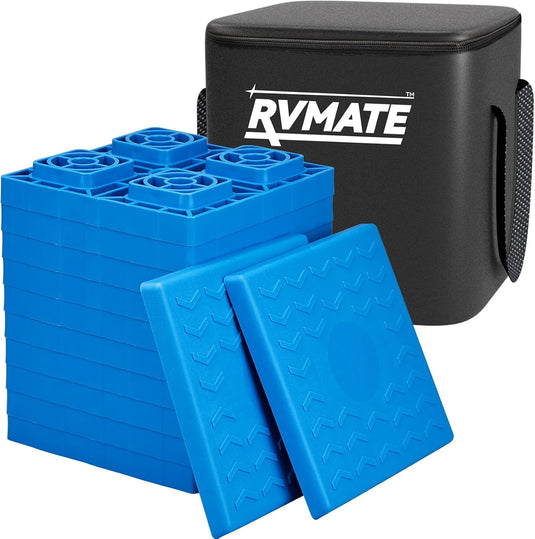
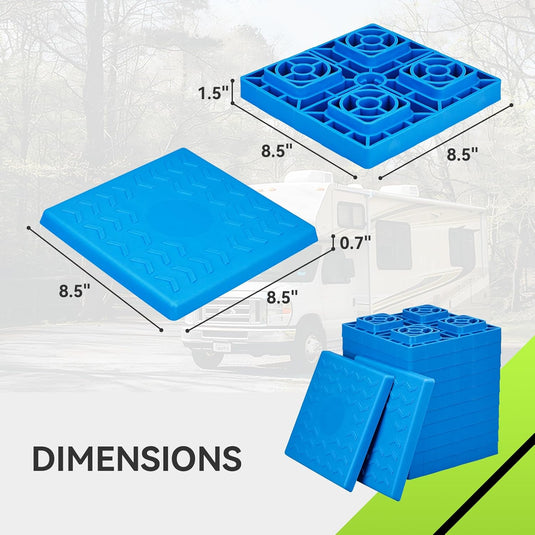
This is precisely why dedicated RV leveling blocks are a smart upgrade. A good set of high-density polyethylene blocks isn't just about comfort; it's about performance.
- They provide a stable, precise, and permanent foundation. You can stack them like LEGOs to achieve millimeter-perfect leveling.
- They don't compress or warp, ensuring the level you set at noon is the level you have at midnight.
-
Their interlocking design and grippy texture prevent dangerous slip-outs.

Investing in a reliable leveling system is the first, and most important, step in creating a warm RV. It’s the stable stage upon which your heating efficiency—and overall camper comfort—is built. It ensures your fridge cools evenly, your water drains completely, and yes, that your carefully managed warm air fills the space uniformly.
For the Ambitious: A Long-Term Project
If you're planning a remodel or have floor access, consider adding a radiant barrier under your flooring. Materials like reflectix can be installed between the subfloor and your finish floor, reflecting heat back into the living space and providing a significant thermal break. It’s the ultimate "warm floors" project.
Your Blueprint for a Truly Warm Winter
Warmth isn't just about the thermometer reading. It's about the feeling of even, enveloping comfort. You can achieve it by focusing on system efficiency, not brute force.
Here’s your actionable plan:
- Start with the Foundation. Before you even plug in your fan, ensure your rig is perfectly level with a trustworthy set of RV leveling blocks.
- Activate Circulation. Employ a simple floor-level fan to mix the air and eliminate cold spots. This is a genius hack for how to keep warm camping in winter without extra fuel.
- Insulate Yourself. Deploy foam or rubber mats in your main living areas for instant, personal comfort.
Stop fighting a losing battle against the cold. Understand the physics, apply these targeted solutions, and transform your RV from a place with hot air into a truly, comfortably warm home on wheels.
Explore Related Products