What Gauge Extension Cord for an RV? The Engineer's Guide
You're settled into a perfect campsite after a long day of driving. You plug in your RV, eager for the comfort of air conditioning and a hot meal. But when you turn on the AC, it struggles, blows lukewarm air, and the lights dim. The problem isn't a power outage; your RV is simply "starving" for electricity due to an invisible thief: voltage drop.
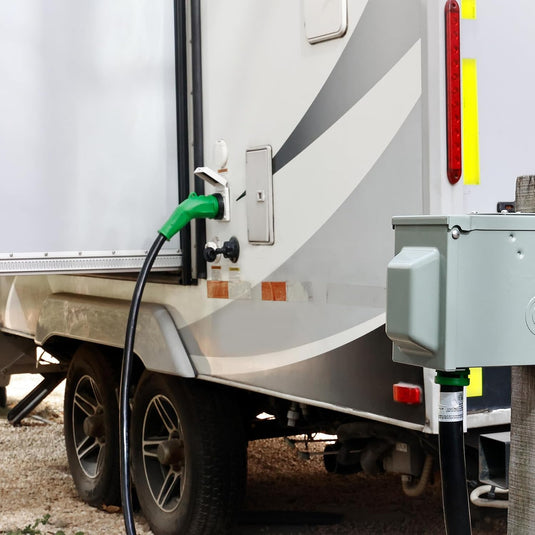
This common issue isn't just an inconvenience—it can damage sensitive electronics and lead to costly repairs. The culprit is often the most overlooked component in your power system: the extension cord. Choosing the right one isn't about length alone; it's about building a low-resistance "power highway" from the pedestal to your home on wheels.
This guide moves beyond basic advice to explore the electrical engineering principles behind safe and efficient power delivery. We'll focus on three non-negotiable parameters: conductor gauge, voltage drop, and safety certifications.
1. Conductor Gauge: The "Width of Your Power Highway"
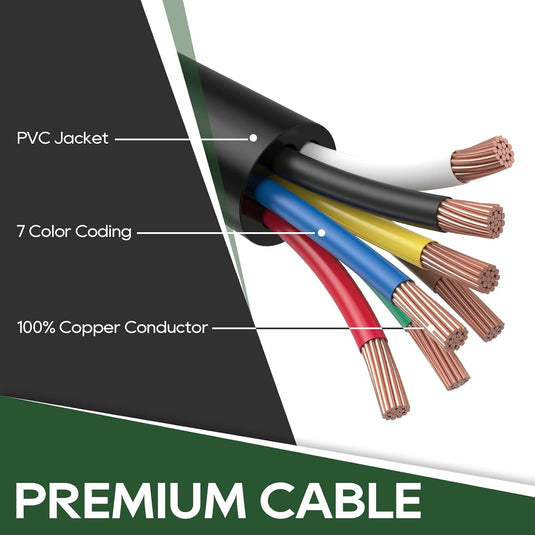
Think of the American Wire Gauge (AWG) number as the number of lanes on a highway. A smaller AWG number means a wider, thicker wire with more "lanes" for electrons to flow.
The Critical Insight
AWG is a logarithmic scale. This means that a decrease of just 3 gauges (e.g., from 13 AWG to 10 AWG) approximately doubles the wire's cross-sectional area and halves its electrical resistance. This is a game-changer for delivering power over distance.
Matching Gauge to Amperage: A Safety Imperative
Using an undersized cord is a severe fire hazard. The wire overheats, insulation melts, and failure is inevitable. Here’s the baseline:
- For a 30-amp RV Service: You must use a cord with 10 AWG conductors or thicker. This is not a suggestion; it's an electrical code requirement for continuous loads.
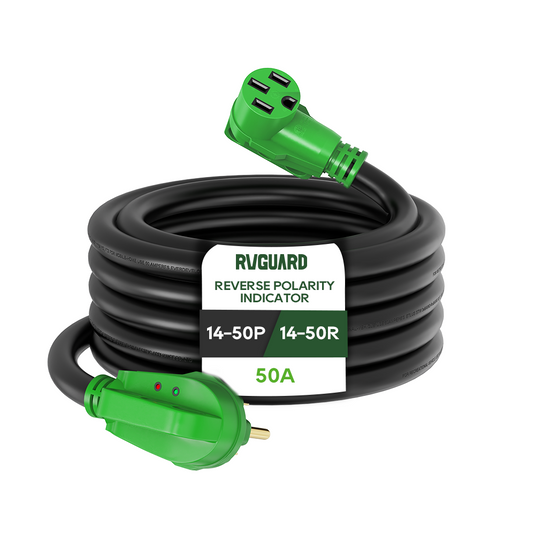
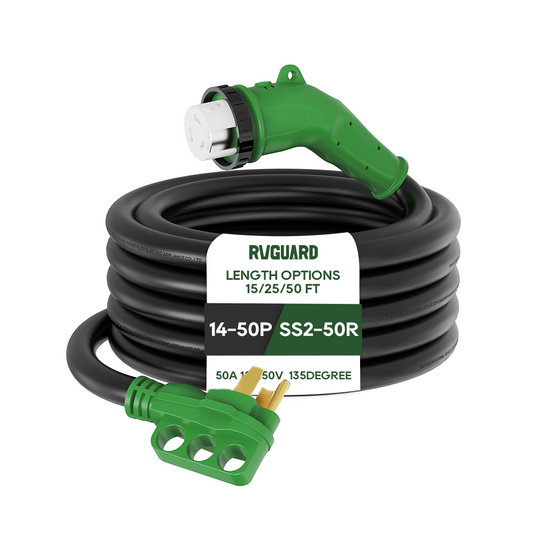
- For a 50-amp RV Service: This demands even thicker wires for the main current paths. A cord built with 6 AWG ‘hot’ and ‘neutral’ conductors (typically in a 6/3+8/1 configuration) is the standard for handling the high current (effectively two 50-amp legs).
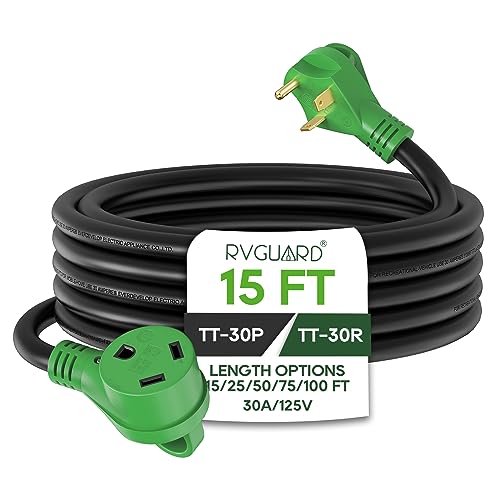
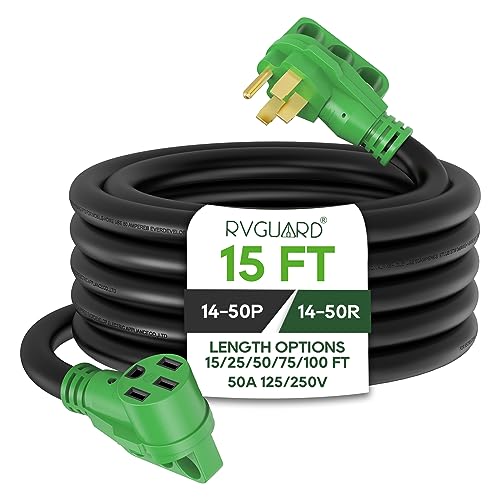
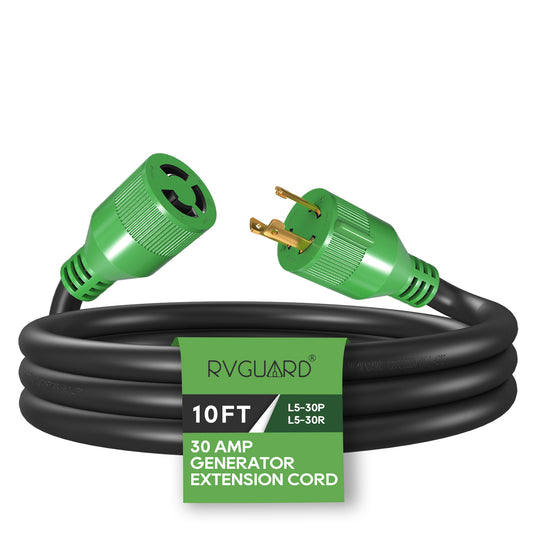
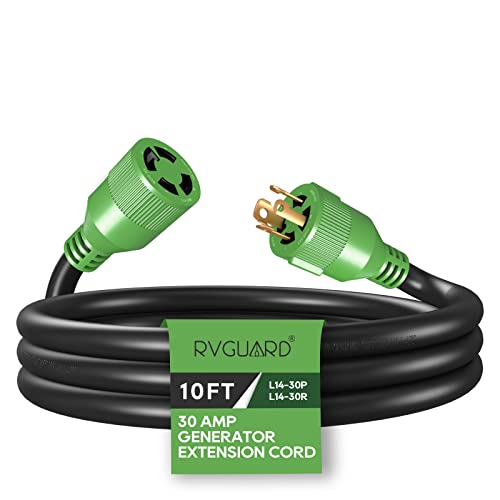
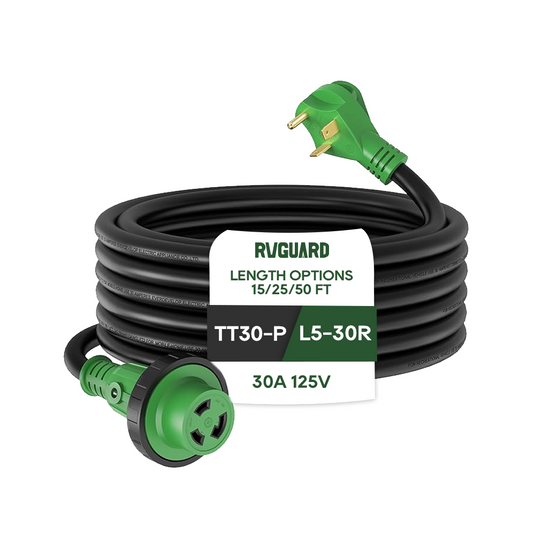
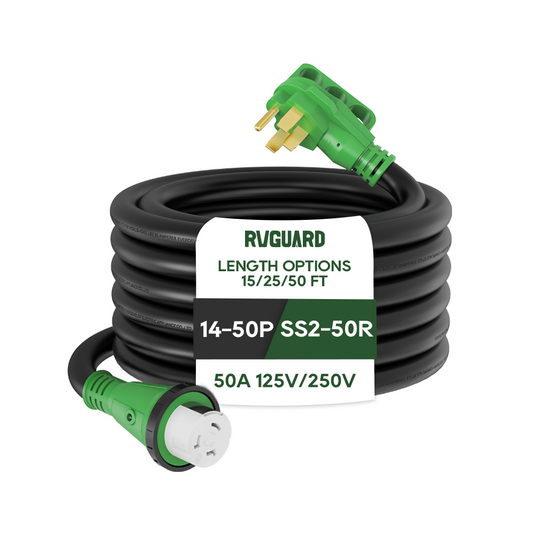
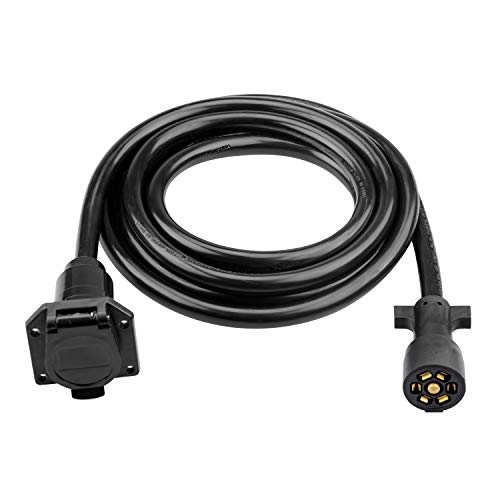
The RVGUARD extension cords are engineered to this standard. The 30A cord features 10/3 AWG wiring. The 50A cord is built with a 6/3+8/1 AWG configuration, ensuring the current-carrying ‘hot’ conductors are robust 6 AWG, as required for 50-amp service.
2. Voltage Drop: The Silent Performance Killer
Voltage drop is the loss of voltage that occurs as electricity travels through a wire. It's governed by Ohm's Law:
Voltage Drop (V) = Current (I) x Resistance (R).
Longer, thinner wires have higher resistance, causing a greater voltage drop. Your appliances are designed to run at ~120V. If they only receive 110V due to a poor cord, they overwork, overheat, and fail prematurely.
A Real-World Calculation
Let's compare a 100-foot, high-quality 10 AWG cord against a cheap, undersized 14 AWG cord for a 30-amp load.
- 10 AWG Cord: Lower resistance results in a minimal voltage drop (e.g., 3-4 volts). Your RV receives a healthy ~116-117V.
- 14 AWG Cord: Higher resistance causes a significant drop (e.g., 8-10 volts or more). Your RV struggles with ~110V, leading to the symptoms described above.
This difference is why a quality 30 amp RV power cord is an investment in the longevity of your refrigerator, air conditioner, and other expensive appliances. This principle is also why our product descriptions honestly note that longer cords (50ft+) may require a reduction in amperage draw—this is responsible engineering, acknowledging the physics of voltage drop to ensure user safety.
3. Safety Certification: Your Independent Verification
A cord is only as strong as its weakest point. Many cheap cords use substandard plastics, poor connector designs, and inadequate internal connections.
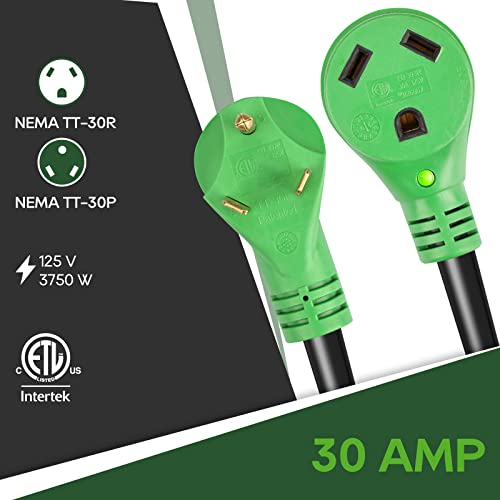
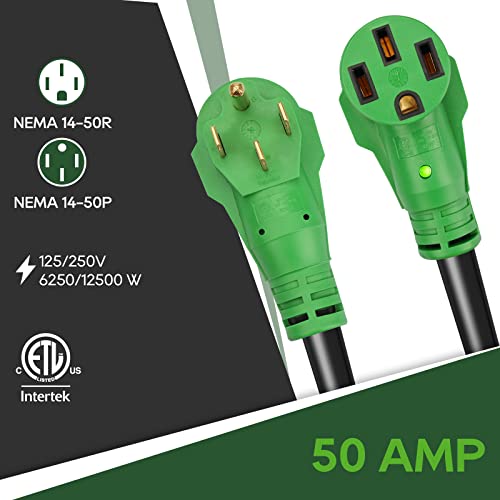
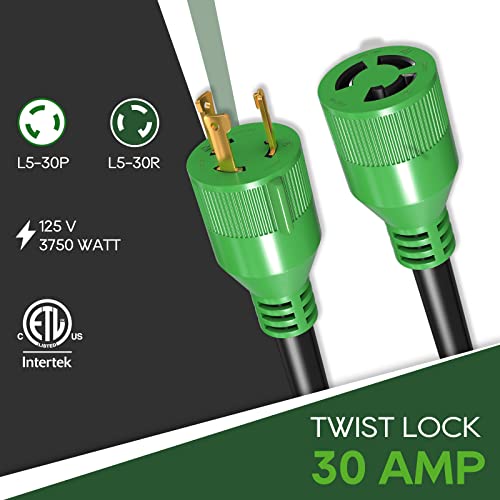
This is where safety certification is crucial. Look for ETL or cETL marks. This means an independent laboratory (like Intertek) has tested the entire assembled product—not just the wire or the plug—and certified it meets stringent US safety standards (UL standards).
The RVGUARD power cords feature full ETL/cETL certification. Learn more.
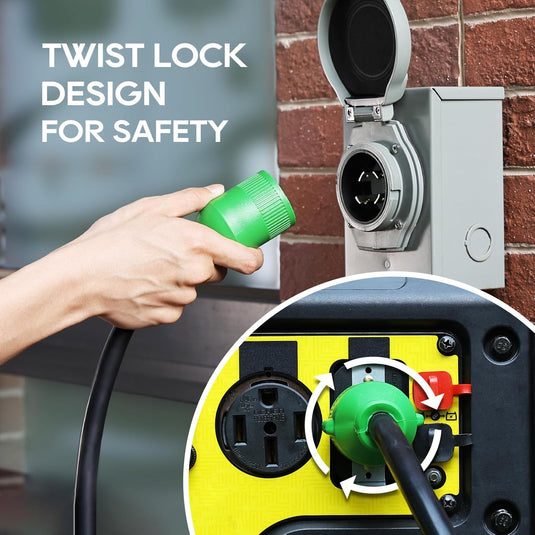
This verifies that the heavy-duty connectors, secure locking mechanisms, strain relief, and flame-retardant jackets are all designed to work together safely, providing peace of mind that generic hardware store cords cannot offer.
The Solution: Matching the Right Cord to Your RV
Understanding these principles allows you to make an intelligent choice.
For 30-Amp RVs: The Balanced Performer
- The Need: Efficient, low-loss power for most travel trailers and motorhomes with a single air conditioner.
-
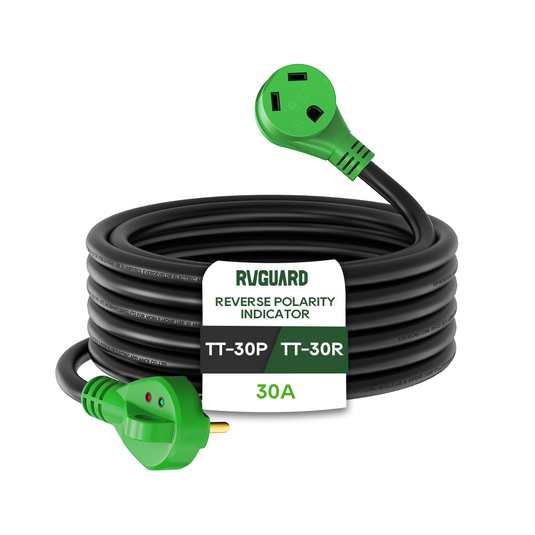
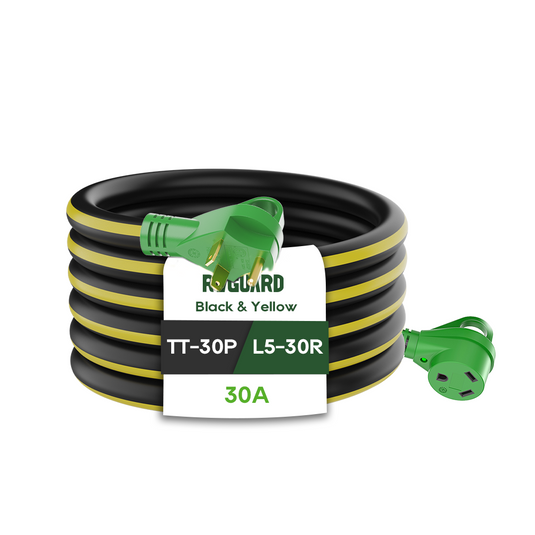
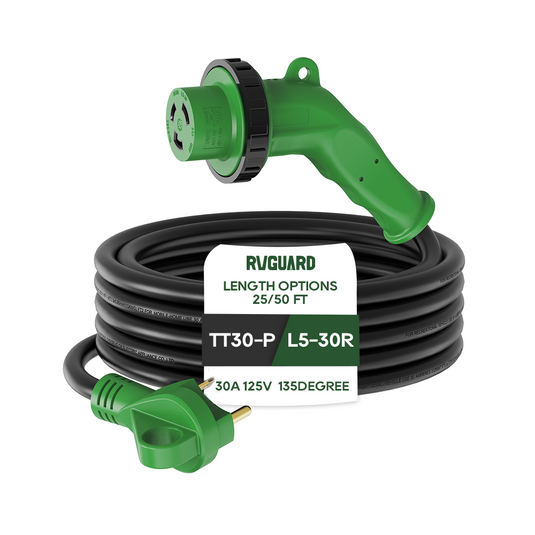
The Tool: RVGUARD 30-Amp Extension Cord
- 10 AWG Wiring: The correct gauge for 30-amp service, minimizing voltage drop.
- NEMA TT-30 Connectors: The specific, standard connector for 30-amp RVs.
- Built-in Power Indicator: A simple LED light provides instant confirmation of live power.
- Ideal For: Ensuring your AC, microwave, and charging systems receive the voltage they need to operate correctly and last longer.
For 50-Amp RVs: The Maximum Power Solution
- The Need: To deliver massive power for large rigs with dual air conditioners, residential refrigerators, and washers/dryers.
-
The Tool: RVGUARD 50-Amp Extension Cord
- 6/3+8/1 AWG Wiring Configuration: Features heavy-duty 6 AWG conductors for the critical current-carrying paths, ensuring minimal voltage drop under high load.
- NEMA 14-50 Connectors: The standard for 50-amp pedestals and RVs.
- High-Capacity Rating: Rated for 12,500 watts, it’s built to handle the highest demands.
- Ideal For: Future-proofing your power supply and ensuring every system in your large RV performs at its best.
Your Action Plan: From Confusion to Confidence
- Identify Your RV's Plug: Check your RV's power inlet. A 30-amp plug has three prongs (one round), while a 50-amp plug has four.
- Choose the Shortest Practical Length: Buy only the length you need. A 25-foot cord will always be more efficient than a 50-foot cord of the same gauge.
- Invest in the Correct Gauge: Never "upsize" your amperage with an adapter on a smaller cord. If you have a 50-amp RV, you need a 50 amp RV extension cord with 6 AWG wire.
- Verify the Certification: Before purchasing, look for the ETL or cETL mark on the product itself or its packaging.
Conclusion: Don't Let Your Investment Go Hungry
Your RV is a significant investment. Providing it with clean, stable, and sufficient power isn't a luxury—it's a necessity for protecting that investment and ensuring countless trouble-free trips.
By understanding the science of wire gauge and voltage drop, and insisting on independent safety certification, you can choose an extension cord that is not just a cable, but a reliable component of your electrical system.
Upgrade from a potential liability to a guaranteed solution. Choose a cord engineered for the job, and never worry about power starvation again.
Explore Related Products